Basics
The Science of Cannabis Curing: Moisture Content, Water Activity, and Terpene Preservation
Understand the science behind cannabis curing. Learn why water activity (aw), not just moisture content, is the key to preserving terpenes and preventing mold.
By The Crushed Desk · 3mo ago · 11 min read
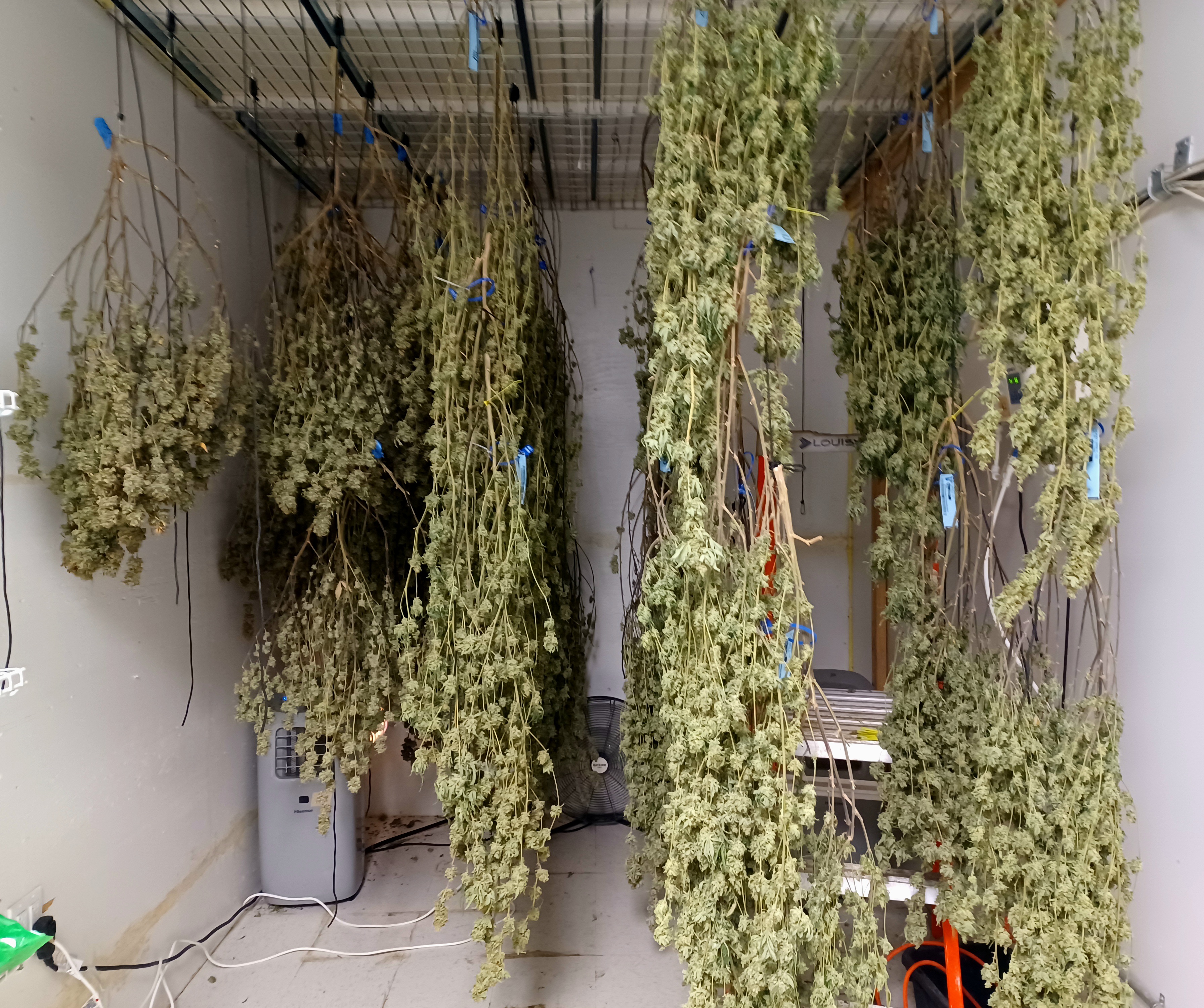
Photo: Beeblebrox, CC BY-SA 4.0, via Wikimedia Commons
Key takeaways
- •You likely don't own a $3,000 water activity meter, but you can still evaluate flower using the same principles.
- •Check the density and snap: a properly cured bud has a slight give, returning to shape when squeezed — not crumbling to dust (over-dried) or feeling spongy (under-cured). The stem should snap cleanly, not bend.
- •Evaluate the aroma: flower that smells like hay or lawn clippings had a rushed flash-dry; a faint ammonia smell means it was jarred too wet.
- •Store premium flower in an airtight glass or steel container in a cool, dark place around 60-65°F — heat rapidly volatilizes monoterpenes and accelerates THC's oxidation into CBN.
- •Skip the old tricks like orange peels or wet cotton balls in the jar — they introduce unregulated moisture and invite mold. Use calibrated two-way humidity packs (58-62% RH) instead.
- •The best genetics in the world are functionally useless if the chemistry was destroyed in the drying room.
If your flower smells like fresh-cut grass instead of gas, the genetics aren't to blame—the cure is. A rushed or improper cure doesn't just result in a harsh smoke; it actively evaporates the volatile terpenes you paid for and invites microbial growth that ruins entire harvests.
Most consumers, and even some legacy commercial cultivators, still judge the progress of a cure by snapping a stem or tossing a generic humidity pack into a bin. But true post-harvest cannabis science has moved far beyond intuition. Modern agronomy relies on two distinct, quantifiable metrics: moisture content and water activity.
Understanding the difference between how much water is physically in the flower and how that water actually behaves at a molecular level is the dividing line between premium, flavorful cannabis and degraded biomass.
Curing is not simply a continuation of drying. Drying is the mechanical removal of bulk water from the plant tissue to halt rapid decay. Curing, on the other hand, is a highly controlled biological and chemical stabilization process.
When a cannabis plant is chopped, its metabolic processes don't instantly shut down. Enzymes within the plant material break down starches into simpler sugars, and chlorophyll begins to degrade. If flower is dried too quickly (a "flash dry"), the chlorophyll gets trapped in the plant tissue, resulting in the harsh, hay-like taste that plagues cheap commercial weed.
Simultaneously, the cure stabilizes the resin enclosed inside the trichome heads, allowing delicate terpenes to settle without evaporating into the atmosphere. A proper cure locks in the chemotype while purging the compounds that ruin the consumption experience.
Moisture content (MC) is a quantitative measurement — it tells you exactly how much water is present in the flower by weight, calculated via the Loss on Drying method. While MC matters for pricing and density, it doesn't tell you whether that water is available to support mold growth.
Water activity (aw) measures the vapor pressure of water in the cannabis relative to pure water at the same temperature, expressed as a decimal between 0.0 and 1.0. Microbial life — bacteria, yeast, and mold like Aspergillus and Botrytis — requires "free" water to multiply, and only water activity captures that free, available fraction.
Two batches of flower can share the exact same 12% moisture content, yet one has an aw of 0.60 (safe) and the other 0.70 (an active breeding ground for mold). The pharmaceutical and food science industries have relied on water activity for decades, and cannabis regulators are finally adopting the same standard.
Above 0.70 aw, flower is wet and under-cured with a high risk of mold. Between 0.65 and 0.70 is a danger zone with moderate risk if storage temperatures fluctuate. Between 0.55 and 0.65 is the optimal cure — safe, with terpenes locked in and ideal elasticity. Below 0.55, flower is over-dried, with severe terpene loss and brittle trichomes.
Major markets like California and Michigan now mandate a strict water activity threshold, typically below 0.65 aw, before flower can legally reach a dispensary shelf — moisture content alone can't guarantee a batch won't fail microbial testing weeks later.
The relationship between the bud's interior moisture and the jar's air is governed by equilibrium relative humidity (ERH): an aw of 0.62 equals an ERH of 62%. This is why curing involves sealing dried flower in airtight containers and periodically "burping" them — releasing moisture that migrated to the surface and replenishing oxygen so anaerobic bacteria can't take hold.
Temperature is arguably the most destructive variable if left unchecked. Terpenes are highly volatile, and monoterpenes like myrcene, pinene, and limonene have the lowest boiling points and evaporate first. If a curing room exceeds 68°F, monoterpenes rapidly volatilize — a facility that runs hot smells "loud" because you're literally smelling the product's value evaporating.
Cold curing, held strictly between 60°F and 65°F, slows cellular respiration and minimizes terpene evaporation while the moisture slowly migrates outward.
Commercial facilities increasingly control vapor pressure deficit (VPD) rather than static humidity, drawing moisture out of dense colas at a steady, predictable rate so the whole batch hits roughly 0.62 aw without over-drying the outer trichome heads.
The most aggressive shift in post-harvest science is lyophilization — freeze-drying flower to sublimate water directly from solid ice to vapor, bypassing the traditional weeks-long cure entirely, preserving the exact terpene profile present at the moment of harvest.
This is general educational information, not medical advice. Effects vary by person, product, and dose — check local law, and talk to a doctor or licensed budtender for guidance specific to you.