Consumption
Live Rosin vs. Distillate: The Science of Extraction and Effects
Learn the difference between live rosin and distillate, from extraction science to the entourage effect, bioavailability, and onset times.
By The Crushed Desk · 3mo ago · 11 min read

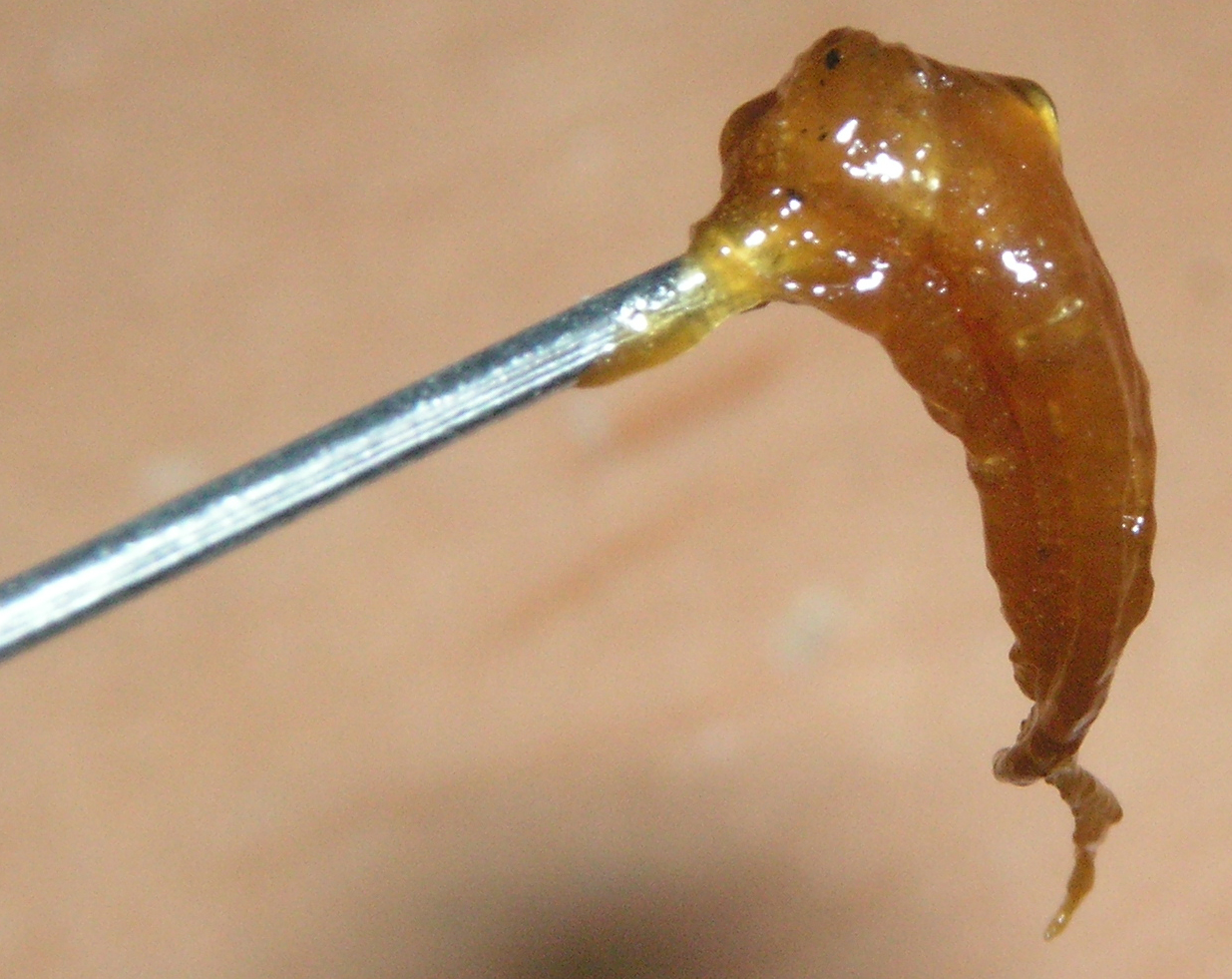
Photo: Cameek33, CC BY-SA 4.0, via Wikimedia Commons
Key takeaways
- •Choosing between live rosin and distillate comes down to understanding what you want out of your experience.
- •If you are shopping on a budget, looking for maximum THC per dollar, or prefer a consistent vape cartridge, distillate is the logical choice.
- •If you prioritize the full spectrum of effects, prefer the natural taste of cannabis, and want to experience the specific physiological nuances of a particular strain, live rosin justifies its higher price point.
- •Ultimately, THC percentage is a poor indicator of the overall quality or the exact effects of an extract. By paying attention to the extraction method, you gain far more control over the type of experience you are taking off the shelf.
When two vape cartridges on the same dispensary shelf both test at 85% THC, why does one cost $25 while the other commands $65? The price gap between distillate and live rosin isn't marketing—it is a chemical and mechanical divide. One is pure THC isolated through refinement. The other is a mechanically compressed snapshot of a living cannabis plant, capturing the complete cannabinoid and terpene profile exactly as it grew.
Understanding the difference requires looking past the THC percentage and examining how the oil was extracted, how the active compounds interact, and how the body metabolizes those compounds. The choice between distillate and live rosin dictates not just flavor, but the mechanism of action, the onset of effects, and the duration of the experience.
Every cannabis concentrate starts with cannabis flower. The divergence happens the moment the plant leaves the grow room. The extraction method determines what survives the journey from the plant's trichomes into the final oil.
Distillate is a refined product. To create distillate, processors take cured cannabis biomass—often trim or lower-tier flower—and wash it with a chemical solvent like ethanol or CO2. This wash strips the cannabinoids from the plant material, yielding a crude oil.
That crude oil undergoes fractional distillation. By applying heat under a vacuum, processors evaporate and condense specific target compounds based on their boiling points. Because THC boils at a different temperature than plant waxes and terpenes, operators can isolate the THC and discard the rest.
The result is an odorless, flavorless oil that routinely tests above 90% THC. Because the distillation temperatures required to isolate THC exceed the boiling points of most cannabis terpenes, the native terpene profile is destroyed. To add flavor back in, processors must blend botanical or cannabis-derived terpenes into the final distillate before filling cartridges or manufacturing edibles.
Live rosin sits at the opposite end of the extraction spectrum. It is completely solventless. The word "live" indicates that the starting material was freshly harvested cannabis that was immediately frozen, bypassing the traditional drying and curing phase. This deep freeze preserves the volatile monoterpenes that normally evaporate during curing.
To extract live rosin, processors take the frozen flower and agitate it in ice water. The freezing temperatures cause the trichome heads (the resin glands containing the plant's active compounds) to snap off. These trichomes are filtered through fine micron bags and freeze-dried into ice water hash.
Finally, that hash is placed between two heated metal plates and subjected to mechanical pressure. The oil that squeezes out is live rosin. Because no chemical solvents are introduced, and the heat used during pressing is relatively low, the final product retains the exact cannabinoid and terpene ratios of the living plant.
The chemical divergence between distillate and live rosin is a clear illustration of the "entourage effect." Coined in 1998, the entourage effect theorizes that cannabis compounds work synergistically. The sum of the plant's parts produces a different physiological response than isolated THC alone.
In a distillate product, the user is consuming concentrated, isolated delta-9-THC. The human endocannabinoid system readily binds with this THC, leading to an immediate psychoactive response. However, consumers often describe the distillate experience as a "flat" or "one-dimensional" high.
Live rosin, by contrast, delivers THC alongside minor cannabinoids (like CBG, CBN, and CBC) and a robust terpene profile (including myrcene, limonene, and pinene). Research indicates that terpenes do more than just provide flavor—they actively interact with cell receptors and can modulate how THC binds to the CB1 receptors in the brain.
For instance, myrcene has been shown in some studies to increase cell permeability. Pinene has been observed modulating the memory-impairing effects of THC. When you consume live rosin, you are experiencing this complex chemical interplay. The specific terpene profile dictates whether the physiological effect feels sedative, stimulating, or balanced—a nuance isolated distillate cannot natively replicate.
To compensate for the lack of native terpenes, distillate manufacturers frequently reintroduce terpene blends back into the refined oil. These reintroduced terpenes are often botanical (derived from non-cannabis plants) or cannabis-derived (extracted from cannabis but added back in later).
While reintroduced terpenes provide flavor, there is ongoing debate among extraction scientists regarding whether constructed terpene profiles can accurately recreate the entourage effect of a native profile. Live rosin guarantees a native profile because the compounds are never separated. The ratio of cannabinoids to terpenes exactly mirrors the genetics of the specific cultivar that was harvested.
Bioavailability refers to the proportion of an active substance that enters the systemic circulation and has an active effect. Both live rosin and distillate have high bioavailability when vaporized, typically ranging from 30% to 50%, depending on the user's inhalation technique.
When vaporizing either concentrate, the onset of effects is practically immediate—usually within 1 to 5 minutes. The difference lies in the duration and character of the experience.
Because distillate delivers a massive dose of isolated THC, the peak plasma concentration in the bloodstream spikes rapidly. Users often report a sharp, immediate onset that tapers off relatively quickly. Live rosin, delivering THC alongside a matrix of minor cannabinoids and terpenes, often results in a gradual onset and a longer-lasting, complex duration of effects as the body metabolizes the full spectrum of compounds.
The difference in bioavailability becomes even more pronounced in the edible market. Distillate has long been the standard for commercial edibles because it is cheap, potent, and flavorless. When you ingest distillate, the delta-9-THC is processed by the liver and converted into 11-hydroxy-THC. This conversion results in a heavy psychoactive experience, but one that lacks the modulating effects of terpenes (which are largely destroyed by stomach acid).
Live rosin edibles have surged in popularity precisely because they carry the full spectrum of cannabinoids into the digestive process. While stomach acid degrades many terpenes, the presence of minor cannabinoids (CBG, CBC) in the rosin can alter the metabolic absorption rate, leading to an edible experience that feels closer to smoking the specific strain the rosin was pressed from.
To understand exactly what you are paying for when choosing between these extracts, it helps to look at typical chemical retention. Testing lab data reveals a stark contrast in the complexity of the oils.
Feature: Extraction Method; Distillate: Solvents + heat; Live Rosin: Mechanical pressure
Feature: Input Material; Distillate: Cured biomass; Live Rosin: Fresh-frozen plant
Feature: THC Concentration; Distillate: 80% – 95%; Live Rosin: 65% – 85%
Feature: Terpene Content; Distillate: 0% (native); 2%–8% (reintroduced); Live Rosin: 4% – 12%+ (native)
Feature: Minor Cannabinoids; Distillate: Very low to zero; Live Rosin: High (retains natural ratio)
Feature: Flavor/Aroma; Distillate: Odorless until formulated; Live Rosin: Exact match to the living plant
Feature: Price Point (Est.); Distillate: $15 – $35 per gram; Live Rosin: $45 – $90 per gram
The data highlights that while distillate wins in sheer THC density, live rosin wins in chemical complexity. The higher price of live rosin is a direct result of the low yield of the solventless extraction process and the requirement for premium starting material.
Despite the premium quality of live rosin, distillate remains the backbone of the legal cannabis industry. The choice between the two often comes down to the specific product category and the consumer's goal.
Distillate accounts for the vast majority of vape cartridge sales nationwide. Its primary advantage is consistency. Because the THC is isolated, manufacturers can create a mathematically identical product batch after batch. By adding the exact ratio of botanical terpenes to every batch, a brand can ensure that their "Blue Dream" distillate cartridge tastes exactly the same in July as it did in January. Distillate is the choice for consumers prioritizing high potency and a lower price point.
Live rosin is the rapidly growing choice for the connoisseur market. Because live rosin requires specific, high-resin cultivars to yield profitably, it is treated as a premium, small-batch product. The flavor and effects will vary slightly from batch to batch based on the specific harvest.
Live rosin vape cartridges require specialized hardware that operates at lower voltages to avoid burning delicate terpenes. Live rosin edibles command a premium price because they offer a strain-specific experience that distillate cannot match. Consumers are willing to pay a premium for live rosin because it represents the unadulterated expression of the cannabis plant on the commercial market.
Strains in this story
This is general educational information, not medical advice. Effects vary by person, product, and dose — check local law, and talk to a doctor or licensed budtender for guidance specific to you.