Basics
THCA vs. THC: The Chemistry of Decarboxylation and Conversion Rates
Understand the chemistry between THCA and THC. Explore decarboxylation rates, conversion math, and why total THC formulas matter for consumer products.
By The Crushed Desk · 3mo ago · 9 min read

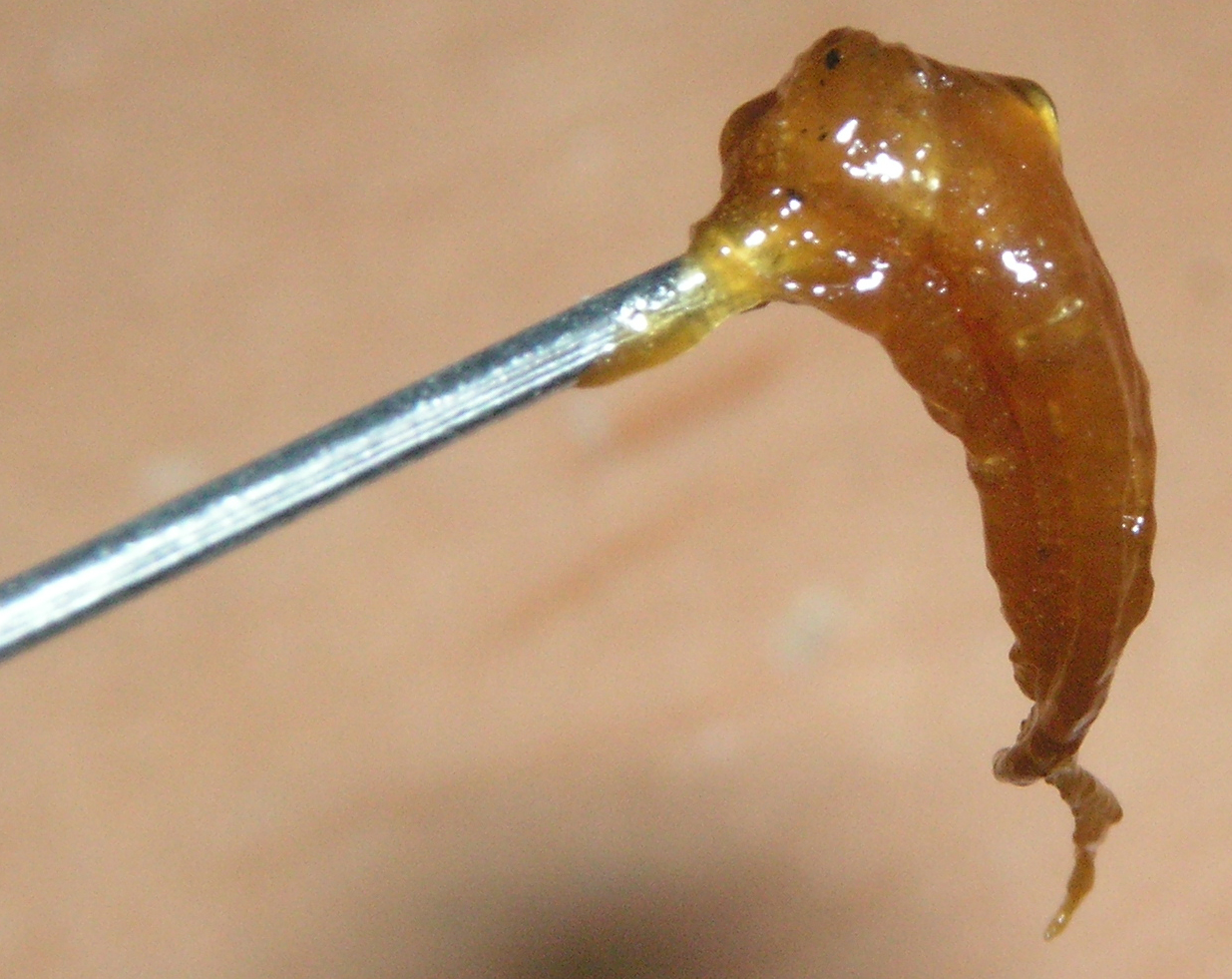
Photo: Fred~dewikibooks, CC BY-SA 3.0, via Wikimedia Commons
Key takeaways
- •Understanding THCA and THC helps with dosing, purchasing, and evaluating product quality.
- •Check that a COA calculates Total THC as THC + (THCA × 0.877) — brands that just add the two percentages are overstating potency by nearly 13%.
- •Consumption method changes how much THCA actually becomes active THC: smoking destroys more than half through combustion, while lower-temperature vaporization preserves significantly more.
- •Raw or un-decarboxylated cannabis isn't intoxicating, regardless of its THCA percentage, because the bulky carboxyl group blocks CB1 binding.
- •Decarboxylation is a measurable physical process governed by heat, time, and molecular mass — not marketing hype.
Cannabis flower labeled "30% THC" doesn't actually contain 30% THC — raw plant material is packed almost entirely with THCA (tetrahydrocannabinolic acid), the non-intoxicating precursor. The conversion from THCA to THC, called decarboxylation, is a specific, quantifiable chemical reaction, and understanding it explains why consumption method changes potency, why lab results are structured the way they are, and how real-world yield compares to the theoretical maximum.
Cannabis plants synthesize cannabigerolic acid (CBGA) first, which specific enzymes convert into THCA. The "A" refers to a carboxylic acid group attached to the molecule's main ring, and its bulk physically prevents THCA from binding effectively to CB1 receptors — which is why raw cannabis, un-decarboxylated, isn't intoxicating no matter how much THCA it contains.
Decarboxylation removes that carboxyl group, releasing CO2 as a byproduct: THCA plus heat yields THC plus carbon dioxide. It happens naturally at a glacial pace from ambient heat and light, but meaningful conversion requires real thermal energy — too little heat leaves THCA unconverted, too much degrades the resulting THC into CBN. Standard extraction-grade decarboxylation targets roughly 220°F to 240°F for 30 to 45 minutes, favoring a longer bake at moderate heat over a fast, high-heat flash that risks volatilizing terpenes.
This is also why Total THC on a COA isn't simply THCA plus THC added together. Losing the CO2 molecule means the resulting THC weighs less than the THCA it came from — THCA's molecular mass is 358.47 g/mol against THC's 314.46 g/mol, a ratio of 0.877. The standard formula is Total THC = THC + (THCA × 0.877); a strain testing at 25% THCA and 1% active THC has a real maximum yield of about 22.92% Total THC, not 26%. Any label that skips that multiplier is overstating potency.
Consumption method also matters, since real-world conversion is never 100% efficient. Combustion hits roughly 1,000°F instantly, decarboxylating THCA but destroying much of it in the process and losing more to sidestream smoke — smoking typically yields only 30% to 40% of available THC. Dry herb vaporizers run 350°F to 400°F, hot enough for near-instant decarboxylation without combusting the plant material, yielding roughly 50% to 60%. Edibles are baked at a controlled 220°F to 240°F over time, pushing conversion efficiency close to the 87.7% theoretical maximum — but oral bioavailability is limited to just 4% to 12% by first-pass liver metabolism, regardless of how efficiently the THCA converted.
THCA also shows up independently in high-end concentrates: extractors can manipulate temperature and pressure so THCA crystallizes out of solution into faceted "diamonds," surrounded by a terpene-rich liquid called "sauce." Dabbing THCA diamonds is a rapid, high-temperature decarboxylation — the flash heat of a quartz banger instantly sheds the carboxyl groups, delivering a very pure, potent dose of active THC.
The THCA/THC distinction also underpins a major regulatory loophole. The 2018 Farm Bill defined legal hemp using active Delta-9 THC rather than Total THC, so cultivators realized they could grow high-potency cannabis and harvest and test it before significant decarboxylation occurred — as long as active THC stayed below 0.3%, flower with 20%+ THCA could technically qualify as legal hemp. When a consumer smokes or vapes that "THCA flower," heat converts the THCA to THC exactly as it would with standard dispensary cannabis; biologically and chemically the two are indistinguishable, with the difference existing entirely in legal taxonomy and testing timelines. Many states have since closed the loophole by requiring Total THC testing that accounts for post-decarboxylation yield.
This is general educational information, not medical advice. Effects vary by person, product, and dose — check local law, and talk to a doctor or licensed budtender for guidance specific to you.