Effects & Health
The Entourage Effect, Explained: Why Whole-Plant Cannabis Hits Different
Two products with identical THC can feel completely different. Here's the pharmacology behind why cannabinoids and terpenes working together change the experience — and why chasing the highest THC number often backfires.
By The Crushed Desk · 3mo ago · 6 min read
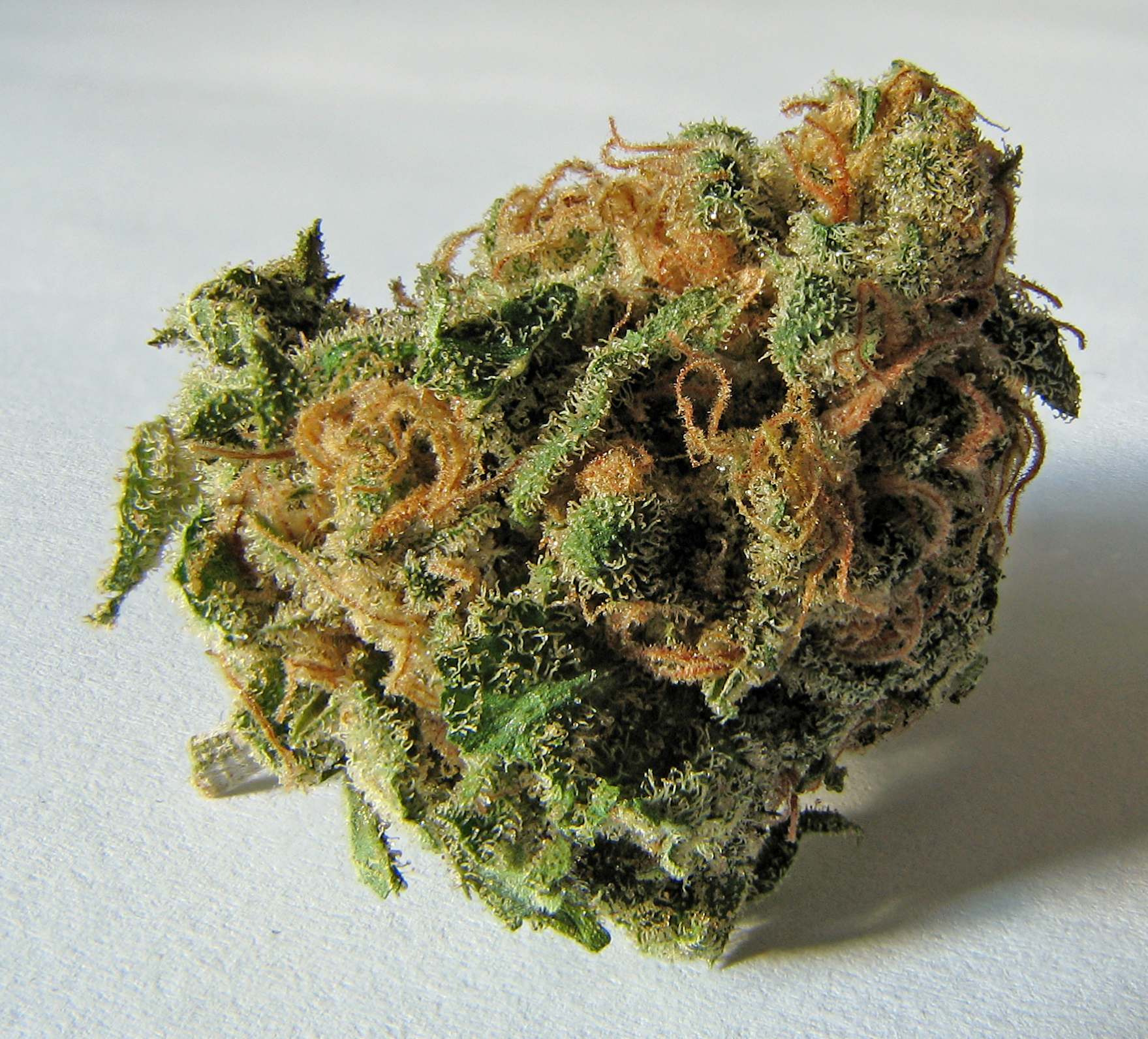
Photo: yogi Bushby, CC BY 2.5, via Wikimedia Commons
Key takeaways
- •The "entourage effect" describes how cannabinoids and terpenes interact so that their combined effect differs from what any single compound produces alone — first documented in 1998 by researchers Raphael Mechoulam and Shimon Ben-Shabat.
- •A 2020 University of Colorado study in JAMA Psychiatry found that concentrate users taking much higher THC doses (70-90%) reported similar intoxication levels to flower users at far lower doses (16-24%), suggesting THC potency alone doesn't determine how strong a product feels.
- •Full-spectrum products preserve the widest range of cannabinoids and terpenes; broad-spectrum keeps most of that profile minus THC; isolate strips everything down to one compound — each trades off synergy for precision differently.
- •The terpene profile on a Certificate of Analysis (COA) is often a better predictor of the actual experience than the THC percentage alone.
Consume a high-THC distillate and the experience can feel strangely one-dimensional. Smoke a lower-THC full-spectrum flower and it can feel more robust and longer-lasting, even at a fraction of the potency on the label. That gap is the entourage effect at work.
For years, cannabis cultivation and shopping were driven almost entirely by one number: THC percentage, on the assumption that more THC simply means a stronger product. But the plant produces over 100 cannabinoids and hundreds of distinct terpenes, and when those compounds are consumed together, they can modulate and reshape each other's effects. That interaction is why two products with identical THC levels can produce very different experiences depending on everything else in the profile.
The term "entourage effect" was first used in 1998 by researchers Raphael Mechoulam and Shimon Ben-Shabat, who found that otherwise-inactive fatty acid compounds in the body's own endocannabinoid system could enhance the activity of the endogenous cannabinoid 2-AG. Cannabis researcher Dr. Ethan Russo later popularized the term for the plant itself — describing the synergy between phytocannabinoids like THC, CBD, CBG, and CBN and terpenes like myrcene, pinene, and limonene, where the combined effect of several compounds can exceed the sum of their individual effects.
The mechanisms behind that synergy run through the endocannabinoid system, the network of CB1 and CB2 receptors distributed throughout the body. THC on its own binds directly to CB1 receptors, driving the classic intoxicating effects. Alongside other cannabinoids and terpenes, several things can change that picture: CBD appears to act on a secondary site on the CB1 receptor that can reduce THC's binding there, which may explain why CBD is often reported to soften some of the harsher effects of a high-THC dose, like a racing heart or short-term cognitive fog. Terpenes may also affect how cannabinoids are absorbed and metabolized — some are fat-soluble in ways that could help cannabinoids cross the blood-brain barrier more efficiently. And several cannabis compounds act on receptor systems well outside the endocannabinoid system entirely, including serotonin, dopamine, and GABA pathways, which is one reason a terpene like linalool is associated with a physically calming effect that THC alone doesn't produce.
This is also why cannabis scientists increasingly describe products by "chemovar" — chemical variety — rather than the indica/sativa/hybrid labels that describe plant structure but say nothing about the actual chemical makeup. A few pairings come up often in this research: myrcene alongside THC is associated with the heavy, physically relaxing effect commonly (if imprecisely) chalked up to "indica" strains, and may help THC cross the blood-brain barrier faster. Pinene alongside THC is studied for possibly counteracting some short-term memory impairment. Limonene alongside CBD is frequently reported by consumers as producing a clear-headed, uplifting feel.
The clearest illustration of THC-alone versus whole-plant synergy is the spectrum of extract types on a dispensary shelf. Full-spectrum products — live rosin or RSO, for example — preserve the complete profile of cannabinoids, terpenes, and flavonoids from the source plant, including trace THC, and deliver the fullest version of a given cultivar's effect. Broad-spectrum products keep a wide range of cannabinoids and terpenes but have THC intentionally removed down to non-detectable levels, offering much of that interaction without intoxication. Isolate strips everything down to a single compound at 99%+ purity — precise and consistent, but without any of the surrounding synergy, which is part of why isolate-based products are often described as feeling comparatively flat.
A 2020 study led by researchers at the University of Colorado, published in JAMA Psychiatry, put a number behind this. The study compared regular concentrate users, who were using products with 70-90% THC, against regular flower users, whose products ranged from 16-24% THC. Despite that large gap in dose, neurobehavioral measures of intoxication came out remarkably similar between the two groups. The researchers' working explanation was that once CB1 receptors are effectively saturated, additional THC delivers diminishing returns, while the wider terpene and minor-cannabinoid profile in flower likely shapes the experience in ways that make it feel comparably potent at a much lower THC dose.
The practical takeaway is that chasing the highest THC percentage on the shelf is often the wrong optimization. A Certificate of Analysis (COA) that lists a full terpene breakdown, not just a THC number, is a better guide — an 18% THC flower with a rich terpene profile can outperform a 30% THC flower that's been stripped of most of its terpenes during processing. Shopping by chemovar, and paying attention to a product's extraction method (live resin and live rosin are made to preserve volatile terpenes that standard distillation processes tend to destroy), tends to be a more reliable way to find what actually works than shopping by THC number or by indica/sativa label alone.
This is general educational information, not medical advice. Effects vary by person, product, and dose — check local law, and talk to a doctor or licensed budtender for guidance specific to you.